


Minority Report, directed by Steven Spielberg (2002), is set in 2054 and depicts a future in which precogs (humans with psychic-like abilities) can predict when a crime is about to occur, enabling a specialised police-like force to intervene before it happens.1 While this film is not about lobotomy, it explores crime through a science-fiction lens.2 The film raises questions about the causes of crime, possible efforts to prevent it, and the ethics of detaining people before they’ve committed a crime. While the film is fictional, in our world, nations have tried to prevent crime by identifying, segregating, sterilising, and eliminating people they deemed dangerous.3
Minority Report’s Plot
A pilot Pre-crime program has almost eliminated murder in a city. This six-year-old program is a prototype Pre-crime police program in DC under consideration for national deployment. In this fictional world, precogs have psychic visions that guards can visualise to determine where a crime will allegedly occur. This security force then intervenes before a crime happens. The would-be murderers are placed in a kind of induced coma. When the film begins, Danny Witwer (Colin Farrell) is sent to audit the program before its expansion.4
John Anderton (Tom Cruise) acts as the Pre-crime chief. Anderton joined because his child was abducted and never found. To cope with the loss, Anderton uses a drug. During one of his visits to the precogs, one of them, Agatha, jolts out of her trance state and embraces Anderton. He discovers something fishy about one of the earliest Pre-crime convictions, the drowning of Anne Lively. As he investigates, Anderton gets suspicious. Later, the precogs predict that Anderton will kill. Witwer launches a manhunt.
Anderton is on the run and visits Dr Iris Hineman, whose research led to the precog program. She found that using neuroin during pregnancy changed babies’ brains and gave them abilities. The precogs almost always agree, Hineman reports, but on occasion one has a different vision, known as a minority report. These minority reports are deleted to maintain the alleged infallibility of the precogs. Anderton suspects that the crime the precog pushed him to investigate is suspicious.
Anderton has his eyes swapped to avoid retinal scans and breaks into his former office to kidnap one of the precogs. He and the precog find Leo Crow, the man the precogs predicted Anderton would kill. Crow has plenty of photos of children, including Anderton’s missing son. After Anderton almost kills Crow, they discover that the images were planted, and Crow commits suicide in a manner consistent with the precogs’ vision, thus creating evidence consistent with Anderton’s guilt. The vision comes true even though Anderton chose not to shoot. He then flees to his ex-wife’s place.
Anderton encouraged Witwer to investigate the dubious Lively case. Witwer discovers evidence which suggests Lively was murdered and goes to inform Pre-crime director Lamar Burgess. Burgess kills Witwer before he can expose him, knowing that, with the precogs offline, they would not see his crime. Later, Anderton gets arrested and is condemned for the murders of Crow and Witwer. He, like others arrested by Pre-crime, is placed in a coma.
Later, Anderton’s ex-wife, Lara, breaks him out of prison and allows him to confront Burgess. Burgess had exploited the existence of echoes in precog predictions to murder the mother of one of the precogs because she was trying to reclaim her child, and this would have endangered the program. During an event, Anderton exposes Pre-crime, which is disbanded.
The Department of Pre-Crime
In Minority Report, precogs experience the future in flashes. A machine generates a specially designed ball with the names of the victim and the perpetrator. Police officers get videos of these flashes, which they investigate to determine where the murder will take place. This investigation lets them prevent the specific crime depicted in the vision. They usually get notice a few days before a crime is committed, unless it is a crime of passion, in which case they get less time.
In the film, we see advocates of the Pre-crime program asking people to “imagine a world without murder,” claiming a 90% decrease in murders after the program started. The program has stopped all would-be murderers for six years. Even Witwer, who looks at the precogs with suspicion, admits that “people have gotten the message.” An interesting point to make here is that, as a result, most crimes are crimes of passion because people have gotten the message that planned murderers get caught.
Free Will, Determinism, and Pre-crime
The movie raises questions about free will and determinism. At the beginning of the film, Anderton and his team stop a husband from killing his wife and his wife’s lover. He gets arrested and charged with “future murder.” The man desperately claims, “I didn’t do anything.” Despite his pleas, Anderton says, “Give the man his hat,” as he is placed under an induced coma and imprisoned.5
This scene highlights a key issue in the film: judging individuals before they have committed a crime. In Minority Report’s fictional world, this complication had allegedly been solved because the precogs were certain. Witwer is suspicious of the program and asks about false positives. He is told the precogs “don’t see what you intend to do, only what you will do.”6 In contrast, when Anderton confronts Crow, one precog tells him, “You can choose.”
The Precogs
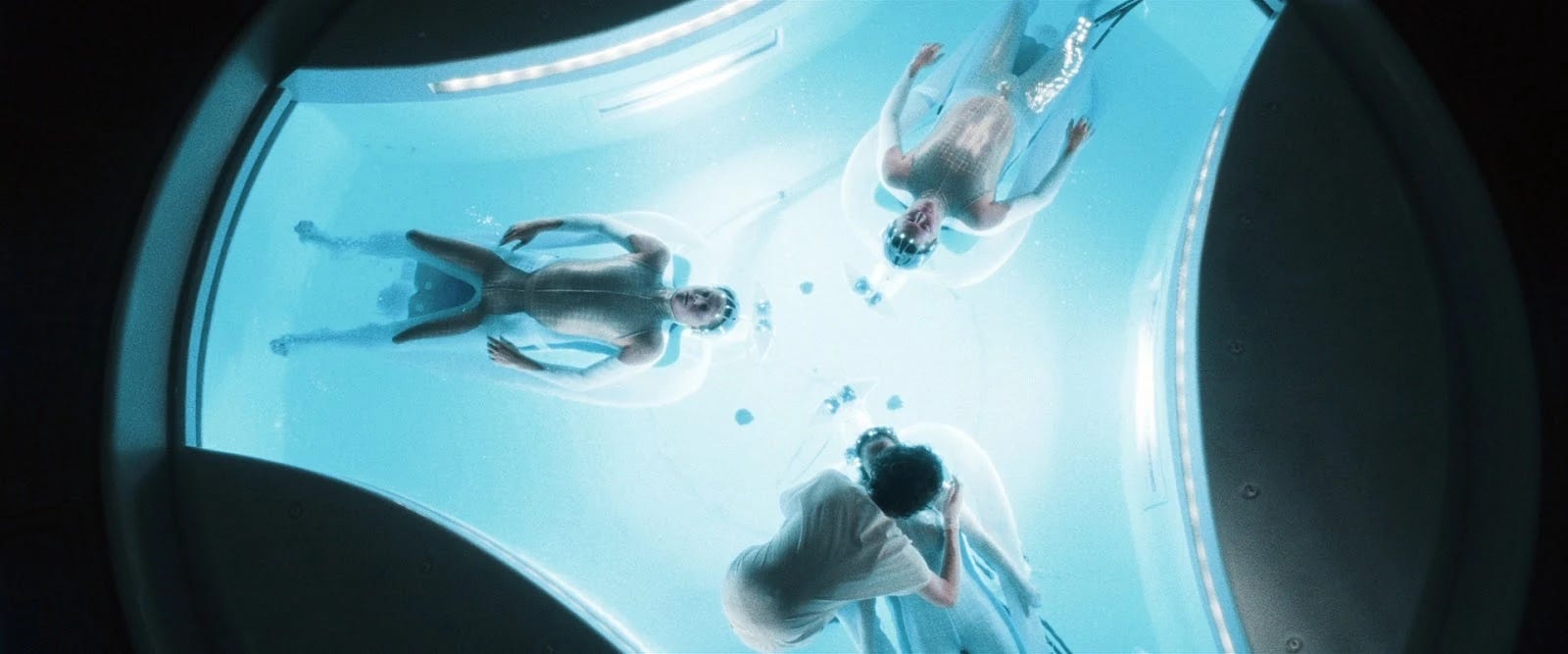
The precogs are fully human, yet they also allegedly have psychic visions about future murders. This is one of the film’s least plausible parts, but so be it. The movie tries to couch this ability within a modern framework, claiming that a drug caused changes when pregnant women abused it. These changes allegedly allowed some of the children to have these abilities.
When Anderton visits the person whose research underpins the program, she says she is not an inventor. Dr Hineman dismisses her role as one: “If the unintended consequences of a series of genetic mistakes and science gone haywire can be called an invention.” More importantly, she reveals that the precogs “occasionally they do disagree.”
Then, Anderton confronts Lamar Burgess, the program’s director, who calls these disagreements an “insignificant variable.” But the program punishes people for crimes they still have not committed on the premise that its predictions are infallible. Introducing errors brings the ensuing punishments into question.
Witwer asks if the precogs can see other crimes. He is told that they only see murders, because there is “Nothing more destructive to the metaphysical fabric that binds us than the untimely murder of one human being by another.”
Other films have raised similar questions. For example, A Clockwork Orange presents a world where criminals can be therapeutically made averse to committing crimes, thus preventing them from committing future crimes. Both Minority Report and A Clockwork Orange imagine a technology which solves the problem of crime. Witwer concludes that “science has stolen most of our miracles.”
Fact or Fiction: Dangerousness and Crime Prevention
The film’s premise seems odd and fictional; however, if we examine our histories, we can find cases where thinkers and policymakers acted as if they could predict an individual’s future actions. In sharp contrast to the film, these claims were not about predicting a specific crime; instead, they predicted an individual’s alleged likelihood to commit future crime(s). Here are a few examples.
Numerous attempts have been made to determine a person’s alleged dangerousness. In 1845, German police expert Gustav Zimmermann claimed that science could help stop crime. Around that time, phrenologists posited they could read an individual’s personality through studying the shape of their head. While Zimmermann recognised phrenology was far from providing sufficiently reliable results, he hoped that, in the near future, such a science could identify would-be criminals. He wrote,
“Because we should be able to identify on a person’s skull the marks of serious villainy, the state should prescribe an examination of the skull for everyone who reaches the age of twenty-five. Everyone found guilty of having a dangerous predisposition should be hanged or confined preventively depending on his anticipated offence.”7
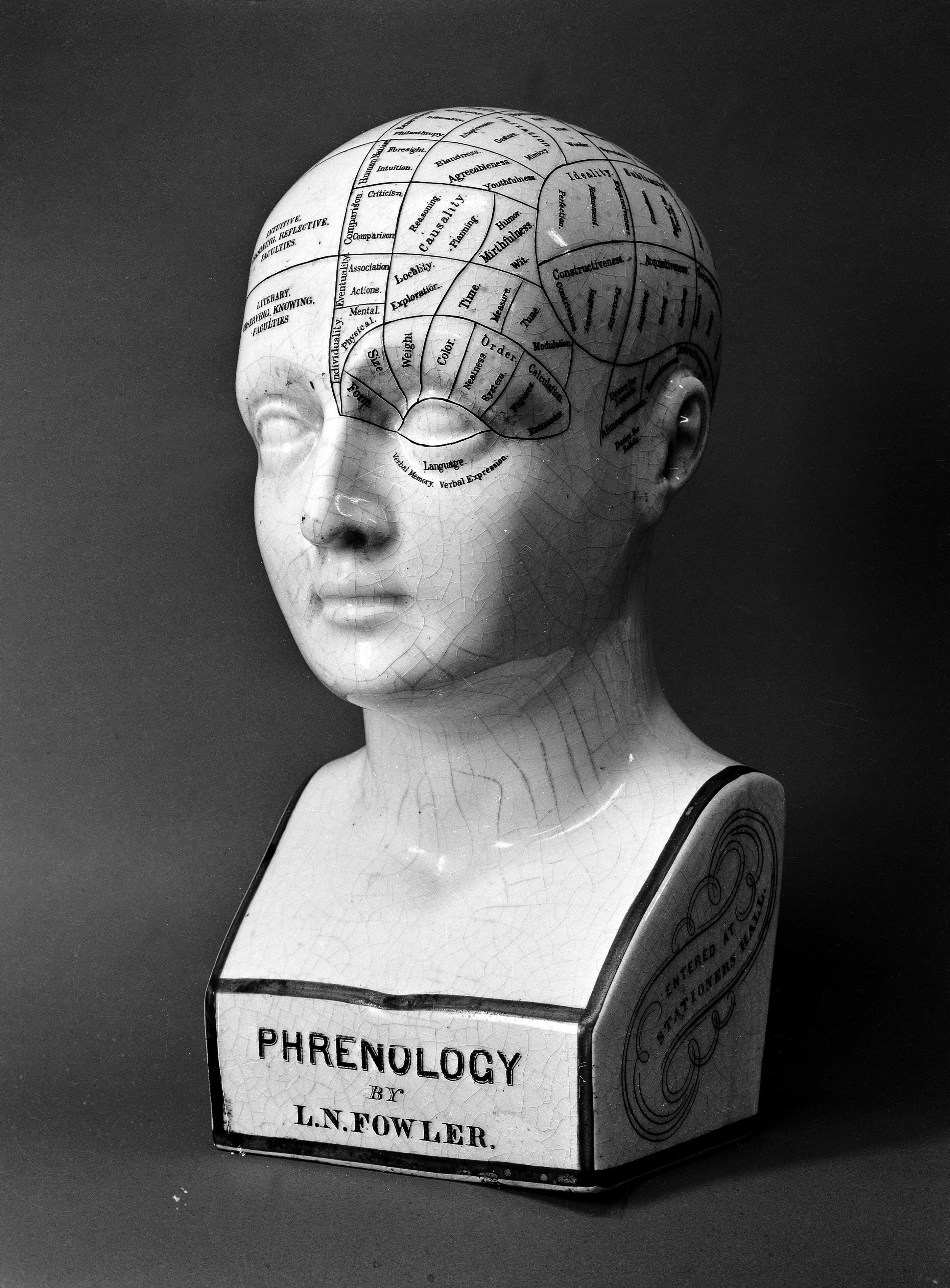
In 1898 Maurice de Fleury, a French physician, wrote the following about criminals.
“And yet we care for them; we raise them in cages, we preserve them from death. For what purpose, God almighty! Is it really human to allow these monsters, these creatures of darkness, these nightmarish larvae to breathe?... I glimpse the possibility of the legal, authorised elimination of all these incurable beings.”
He asked whether it would not be more “pious to kill them.” I would be cautious about reading a hereditary taint into these, while acknowledging that, in effect, elimination or segregation prevents the person from reproducing and from influencing others, which leaves open whether they saw the cause as nature or nurture.
In Nazi Germany, the effort to purify the nation began with sterilisation. The Law for the Prevention of Hereditarily Diseased Offspring was passed on July 14 1933. It called for the compulsory sterilisation of people with undesired hereditary conditions.8 In 1934 alone, 84,525 applications were filed; the courts decided 64,499 cases and ordered 56,244 sterilisations.9
Most had nothing to do with crime, but they reflect the same impulse: to solve social problems by identifying, isolating and removing certain kinds of people. From 1939, the goal shifted from sterilisation to extermination. The elimination of “life unworthy of living” started with programs which targeted children and adults. The T-4 program targeted adults and killed more than seventy thousand people.10 It was called the “Aktion T4” program because the main office was located at Tiergartenstrasse 4. This program used gas chambers between January 1940 and August 1941.
John Shepherd, a historian, argues that predictive policing and risk-assessment tools are usually presented as novel disruptions, as if they had no history.
In 2024, he defended his PhD, A History of Future Crime.11 His thesis, which we will cover in future posts, argued that around 1900 American judges, correctional administrators, and juvenile courts “were increasingly required to judge propensities alongside guilt or innocence.” Their assessment of a youth’s propensities affected outcomes, leading to probation, parole, and, in some cases, “indeterminate sentences.” These judgments determined whether individuals were likely to improve or whether they posed a danger, with their “incorrigibility necessitating incarceration.”
Many other efforts have tried to rehabilitate potentially dangerous people. The entire American Troubled Teen Industry is predicated on identifying wayward teens and treating them to prevent them from becoming dangerous. These programs often asserted that if parents did not intervene, their children would become criminals or addicts.
My doctoral work examines how Argentinian and Uruguayan thinkers incorporated scientific and medical ideas into efforts to reduce crime in their countries. In the early 20th century, peligrosidad (dangerousness) was among their chief concerns. They designed a series of interventions based on changing people’s environment to allegedly prevent them from becoming criminals. These efforts were portrayed as social defence and part of an effort to use legal medicine to reshape the country. Unlike their American counterparts, who were more concerned about heredity, these thinkers focused on the environment’s causal importance.
Conclusions
In 2014, US Attorney General Eric Holder gave a speech to the National Association of Criminal Defence Lawyers, stating that sentencing must “not be based on unchangeable factors that a person cannot control, or on the possibility of a future crime that has not taken place.”
Several of our future posts will explore crime prevention, and how evaluating people’s possible dangerousness (or propensities) affected policies and State interventions. While these predictive systems were not as infallible as precogs allegedly were, many proponents maintained they were valuable. Many of these impacted State policies, gaining popularity, legitimacy, and acceptance. In contrast to Minority Report, these efforts aimed to prevent supposed future crime(s) rather than stop a specific one. Another striking contrast is that in the film’s world, certainty is seen as necessary to convict, confine, and punish a person, whereas in our world we have, in the past, been satisfied with suspicion.
The opinions of alleged experts regarding others’ possible dangerousness have impacted court decisions, the internment of adolescents, educational policy, and more.12
Such predictions have been based on a person’s head shape, physical stigmata, a study of their family, an exploration of their environment, their supposed racial type, hereditary material, and, more recently, brain scans that researchers claim can predict who is more likely to reoffend. We seemingly keep finding new technologies or methods to make such determinations.
The movie is based on a Philip K. Dick novella, but the differences are immense. At the end of the novella, Anderton chooses to save the system rather than destroy it.
New readers may be unaware, but we have embarked on a years-long project to watch every film that includes or mentions lobotomy and provide you with an analysis. It may just leave you wanting one.
I am using an English translation of peligrosidad, which is more like " dangerousness " here. This concern with peligrosidad was high in Latin America during the early 20th century.
Spoilers galore! You have been warned.
In the film, police have developed a sort of helmet which places the subject under a coma-like state. Here again, technology shows up. The man was right; he had not done anything yet.
This is, admittedly, one of the film's most implausible parts. Most systems have false positives and false negatives. I suppose the film needs alleged certainty to justify punishing people for crimes they never got the chance to commit. Note, that in our world we did not need such certainty.
I am unsure why twenty-five; if I had to guess, I'd say that was when they thought a person’s skull stopped changing, but I really have no clue. Criminals and Their Scientists: The History of Criminology in International Perspective. Ed. Peter Becker and Richard F. Wetzell. 2006. Cambridge University Press. p.8
Moser, G. 2014. Radiology in the Nazi Era: Part 3: Roentgen studies and national health: radiology and roentgenology in the Nazi eugenics policy. Translated by Erwin D. Fink. Mitteilungen Der Fachgesellschaften. Strahlenter Onkol 190: 607-620.
Seeman, M.V. 2005. Psychiatry in the Nazi era: review paper. Canadian Journal of Psychiatry, 50(4)
Burleigh, M. 1994a. Psychiatry, German Society, and the Nazi Euthanasia Programme. The Society for the Social History of Medicine. Weikhart, R. 2011.Book Review: Euthanasia in Germany before and during the Third Reich. Trans. Anthony B. Heric and Laura Radosh. Klemm und Oelschläger. Journal of the History of Medicine and Allied Sciences: 66:4.
SHEPHERD, JOHN (2024) A History of Future Crime: Prediction, Youth, and the Organisation of Suspicion in Criminology and American Society, 1900-1960, Durham theses, Durham University. Available at Durham E-Theses Online: http://etheses.dur.ac.uk/15508/
Some days I just like footnotes. Perhaps the academics among you can sympathise. Today, I felt like adding several asides, so there you go.