


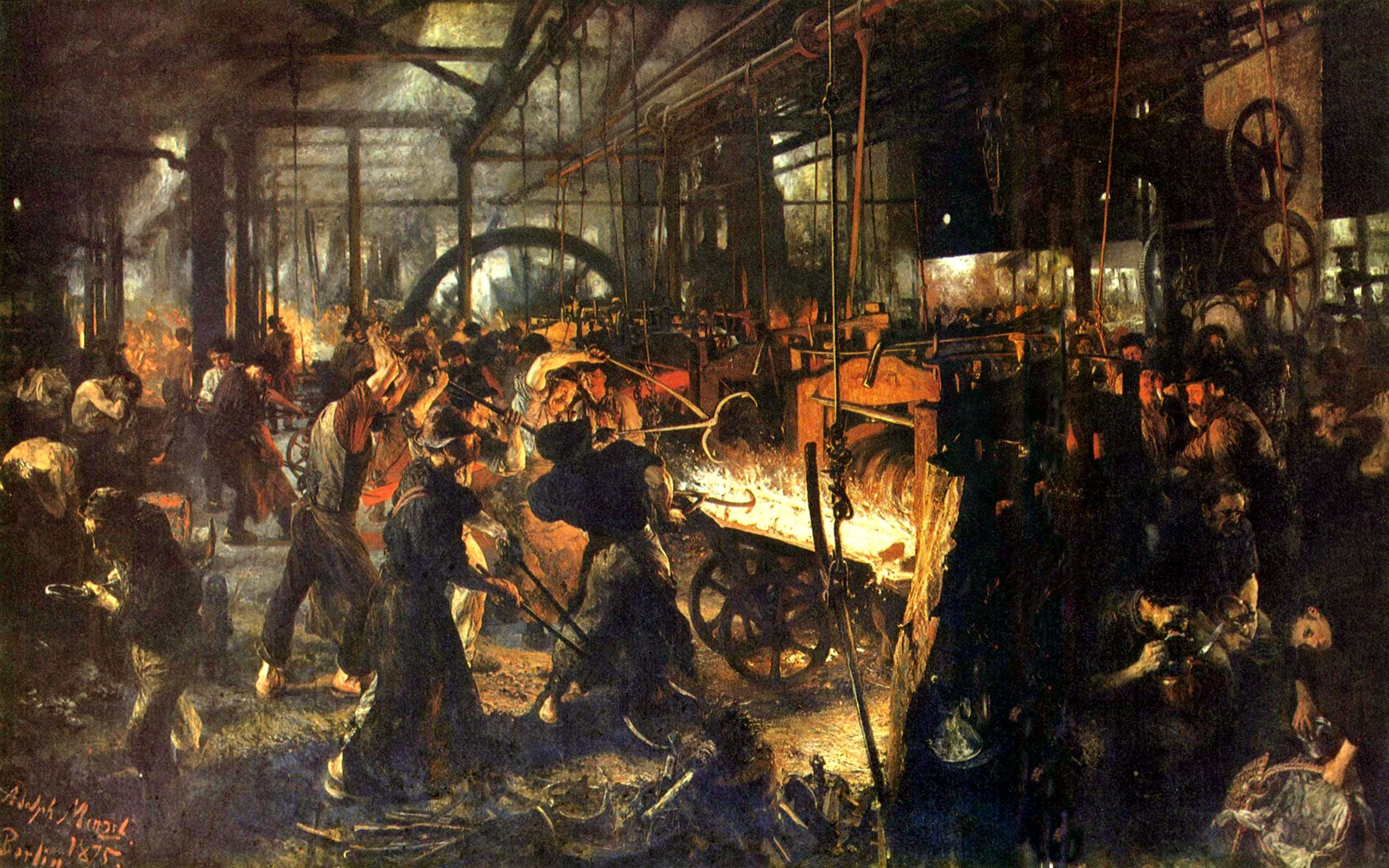
_-_Adolf_Friedrich_Erdmann_von_Menzel_(Alte_Nationalgalerie).jpg&ved=0CBYQjRxqFwoTCLDLyZHfuJIDFQAAAAAdAAAAABAI&opi=89978449)
Recently, Curing Crime featured an article that covered French Revolutionaries misguided belief that just laws would eradicate all crimes, and how Victorian judges judged Victorian criminals against an imagined normal man.
In this post we continue to explore 19th century concerns regarding crime. In the first post, we discuss Andrew Lees’s work on German concerns about the corrupting effects of cities. The second section explores a shift in who is seeking to explain why crime persists.
These examples, along those previously discussed, suggest a trend across Europe in which urbanizing societies are seeking to solve new issues in novel ways. This post explores who and how could produce knowledge about criminals and their crimes.
Moral Discourse and Reform in Urban Germany, 1880s-1914
Andrew Lees argues that middle-class Germans and Protestant clergy were critical of urban environments because of their allegedly corrupting effects on citizens. They substantiated their criticism with ethical and medical arguments and urged that action be taken to address a moral crisis.
Big Cities and Big Problems
Big cities and urbanisation worried thinkers, social commentators, and politicians throughout the developing world. Less argues that, in Germany, many people thought that big cities, Grossstädte, eroded morals and promoted undesired behaviours. He shows that these thinkers were not only concerned about the housing and public health problems in cities, but also with those of moral order.
According to these critics, city dwellers seemed to breach social norms and engage in depraved acts such as “drunkenness, prostitution, and homosexuality” (Lees, p.86). Adolf Stoecker, a Preacher at the Prussian Royal Court, remarked that cities can generate wealth and pride, but that they also cause pain and sorrow. He was gravely concerned that such spaces were “inhospitable” to the Christian faith (Lees, p.86-87). People across the political spectrum shared similar concerns, for example, Hans Ostwald, a left-wing commentator. Nevertheless, not all critics were pessimists. Some sustained that institutional reforms could ameliorate this moral crisis.
Protestant Clergy and Immorality of the City

Protestant Clergy denounced the alleged immorality of city dwellers. Their critiques recognised that living conditions affect how people act, but firmly argued that culture and the individual’s choice were paramount. They explicitly rejected deterministic accounts, which they claimed would wrongly absolve individuals of responsibility. Thus, their thinking was aligned with that of the French revolutionaries and British judges.
Ludwig Weber was a pastor who would lead institutional groups and lead the fight against public immorality (Lees). In 1886, he founded a journal, Korrespondenzblatt zur Bekämpfung der öffentlichen Unsittlichkeit, in which contributors denounced masturbation, prostitution, and homosexuality. The journal condemned all factors which could encourage these allegedly perverse behaviours.
Weber claimed that impurities destroy the body and endanger a person’s mental and spiritual health. He wrote, “If a man wallows in the filth of impurity, his heart cannot rise to the ideals that ought to shine as the lodestars of our lives” (p.93). This kind of language is not necessarily medical or scientific.
Weber published a book with sixteen contributors, where they decried the increase of vice in the cities. According to Lees, the essays in this volume blame individual behaviour for suffering. They denounce new secularism, and Darwinism in particular, as dangerous because of their effect on people. One essay claimed that by treating vice and violence, art makes these appear normal. While some essays did mention social and economic factors as aggravating, they emphasised each person’s choice. For these critics, cities increased sexual impropriety, crime, irreligion and thus endangered the nation (Lees).
Reform-minded Liberals Are Also Afraid of the City
Concerns about big cities are shared by a wide variety of Germans. Reform-minded liberals recognised that cities have created new problems, but believed they could be solved. Lees suggests these reformists keep some of their protestant identity while embracing change.
These thinkers sought to solve the crisis created by big cities through the creation of institutions and education. For example, Viktor Böhmert and Johannes Tews were both hopeful about the role of education and structural institutions in reducing vice and crime (Lees), Lees provides a few examples:
Böhmert argued that alcohol and impurity were more dangerous to Germany than any external threat. He sustained that normal people needed places where they could suppress their bad instincts and find better joys. Thus, he encouraged the creation of parks, coffeehouses, and libraries where people could gather. This would provide healthy outlets in contrast to bars and prostitutes. He proposed labour reforms, including worker rights and the encouragement of profit sharing. Such a belief in institutional reform was common.
Tews, who worked as a school teacher and social reformer, also believed that institutions could solve the problems cities had created. He felt that education could help people make better choices and advocated for creating such opportunities. Tews also suggested that the clergy was exaggerating the amount of crime, and that, actually, crime was going down. He criticised some sentencing practices which he felt encouraged the behaviours they were trying to dissuade.
Conclusions
Lees suggests that these efforts show an eagerness to master an ever more complicated world and the urban masses. While most of those who worried about cities were conservative, Lees highlights that such concerns were also compatible with progressives. These thinkers emphasise individuals making decisions at a time when the role of heredity was not yet dominant.
These thinkers do not explicitly discuss human nature, but their views betray assumptions about the way people are. First, there seems to be an assumption of a reasonable man who is capable of resisting urges and making choices. Second, their explanations suggest that there are no natural differences between the people who choose rightly and those who do not. Third, Webber and the collection of essays show an effort to explain crime and the danger of the city through causal mechanisms. I think that their discussions blur the line between crime and other kinds of antisocial behavior.
Seeing the Criminal Instead of the Crime
Peter Becker concludes that one of the biggest changes in the understanding of crime and criminals was the space in which such knowledge was generated. Secondly, he argues that a set of explanations came to dominate because those who espoused them employed rhetorical strategies that integrated the work of others.1
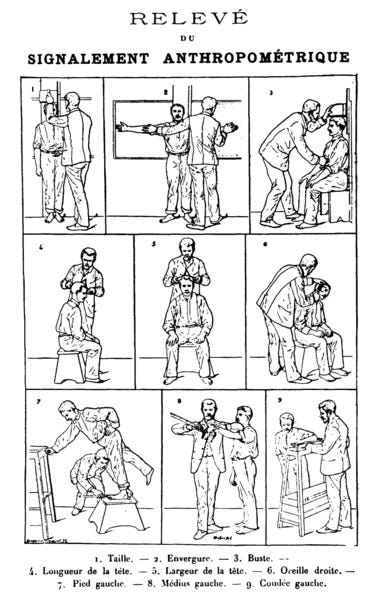
German criminologists began meeting their subjects in prisons and hospitals during the 19th century, where they studied their bodies and minds. Berker argued that these knowledge-generating spaces removed criminals from their social context, effectively hiding it from the expert’s gaze. Concurrently, Becker holds that moral ethics was losing prominence, which allowed social or biological explanations to gain importance. Becker uses Michel Foucault archeological method.
Different Approaches to Studying Crime
Becker suggests that, for a time, there were two major narratives for explaining why certain people committed crimes. Each narrative has explanatory power and different implications for reducing crime. Neither of these perspectives was staunchly deterministic.
Becker proposes dividing historical actors who studied crime into criminalists and criminologists to better understand the history of crime. This analytical category allows Becker to focus on the space and the method by which knowledge about criminals and crime was produced. He holds that both groups hoped to classify criminals and deploy technologies to reduce crime and deviance. They share concerns regarding prostitution, alcoholism, and juvenile crime.
Criminalists (mostly pre-1848) often had direct experience with crime and criminals, and were involved in law enforcement. Frequently, they wrote about their experiences. They were usually interested in the criminal’s biography and personality. They are not as interested in crimes of passion.
In contrast, Becker posits that criminologists studied crime from a distance. These included a new cadre of experts, including “doctors, anthropologists, psychiatrists, and criminal law experts” who met criminals in prisons, jails, hospitals, asylums, and morgues (Becker, p.105). Unlike criminalists, they are more intrigued by violent crimes.
Explanations for Why People Committed Crimes
Criminalists: Criminalists alleged that alcoholism and gambling condemned people to a vicious cycle. They suggested that a person’s social environment played an important role. Consequently, they were interested in further understanding the criminal underworld. For criminalists, a person who commits a crime engages in the “willful abuse of reason” (Becker, p. 131).
Criminologists: They think the key to understanding why an individual commits a crime is in their body. Thus, they look for clinical and psychological causes rather than social networks. They think criminals are different. They allude to both poor environment and tainted heredity as potential explanations. A monumental difficulty for them was how to identify the physical manifestations of criminals.
How to Reduce Crime
Criminalists: Pushed for reeducation and the need to protect would-be criminals from temptation. These individuals worry about societal collapse.
Criminologists: Becker states they offer “scientific solutions to social problems” (p. 129). These tend to be more preventative. They are worried that individuals are degenerating. At the time, these experts developed theories of degeneration that were “seemingly objective” (Becker, p.108). Advocate for segregating and separating criminals from the rest.
An interlude on method
Becker claims to use Michel Foucault’s anthropological method to gain clarity on this complicated historical development. Becker said that Foucault argued that during the 19th century, criminals were divided into “physical, emotional, and psychological beings” (p. 108). Such a division could be either internal or external. Becker states that other times the bodies of criminals were literally divided, and certain institutions showcased parts, including skulls, skins, and tattoos.
Becker’s keenness on Foucault informs his study of this period. For example, his argument concerns who has the authority to produce knowledge about crime and criminals, and he explains the outcomes of several scientific debates through rhetoric. The argument seems cogent; however, the individuals involved would not have called themselves either criminalists or criminologists. These categories were created by Becker. A deeper study could unveil a series of complexities that the use of these categories overlooks
Areas where criminalists and criminologists collaborated
Debates within each camp
Instances in which individuals from each group agree with members of the other group in some respects but not others.
Further, there are other plausible explanations for these changes, such as pragmatic needs. Sellers has demonstrated how prison medical officers were driven by pragmatic needs rather than concerns about generalized explanations.
Criminologists Incorporate the Work of Criminalists
Replacement: In this case, criminologists took a concept developed by criminalists and applied it elsewhere.
Hans Gross, a criminologist, borrows the criminalist’s work on gauner. Gauners were seen as professional criminals. Criminalists described the underworld in which they were thought to originate. Rather than emphasising their choices, criminologists argued that there were “anthropological, physiological, and evolutionist” reasons that explained why some of them committed crimes (p. 118). Gross separated the moral and social habits of the Gauner from their skills and used them to describe gypsies. In short, he replaced the criminal underworld with an ethnicity, where children are born into “their immoral life,” and inherit their moral traits (Becker p.120).
Use parallel evidence: Criminologists drew from the work of other experts to draw parallels.
Cesare Lombroso’s claim that criminals are atavistic was bolstered by his incorporation of ethnographic evidence. Among other themes, he discussed the language used by thieves, arguing that, like savages, they often reproduced natural sounds. He tried to draw similar parallels between the physical and mental traits of criminals and savages.
Serialisation: Criminologists broke criminalists’ work into pieces and used these as bricks to build different arguments.
Becker states that Richard von Krafft-Ebing’s famed work, Psychopathia Sexualis, is an exemplar of serialisation as a strategy for turning evidence supporting the criminalist interpretation into evidence substantiating the criminologist’s approach.
He sought to study degeneration through sexual deviancy. In doing so, he draws heavily and selectively from criminalists’ work, which he broke into parts. He used only what he thought was relevant. Thus, readers encountered a series of examples of sexual motives rather than a series of individual biographies in which sexual motive was part of the whole. In doing so, he was able to both incorporate the work of criminalists while obfuscating its theoretical cohesiveness.
These are interesting examples of academics using the work of others. It seems to me that serialisation is very commonly practised in the modern academy and seen as legitimate.
Becker’s essay is interesting because it raises important questions about the sites and the people involved in producing knowledge about crime and criminals. The developments he describes show that people were thinking more deeply about crime and seeking professional answers for social problems, even if his conclusions about rhetoric are questioned.
Conclusions
Both essays demonstrate that concerns about crime grew alongside urbanization and industrialization. I think Becker’s raises an interesting point by suggesting that the spaces in which such knowledge were generated mattered. On the other hand, this may miss exploring why this shift occurred. Were these experts addressing other social issues? Had professionals succeeded in other realms and were thus seen as capable? Rather, than interpreting their increased prominence as resulting from pursuing power, could we not suggest that their explanations appeared compelling to their contemporaries?
In any case changes in how societies thought about crime were happening, and they would have profound consequences in the next century.
Sources
Becker, Peter. The Criminologists’ Gaze at the Underworld: Toward an Archaeology of Criminal Writing
Lees, Andres. Moral Discourse and Reform in Urban Germany, 1880s-1914
Criminals and Their Scientists: The History of Criminology in International Perspective. Ed Peter Becker, and Richard F Wetzell. 2006. Cambridge University Press.
And Dissertation:
Sellers, Laura Mary. 2017. Managing Convicts, Understanding Criminals: Medicine and the Development of English Convict Prisons, c.1837-1886. PhD Dissertation. University of Leeds.
I find the first thesis rather convincing. I am much more skeptical of the second.
Great read