


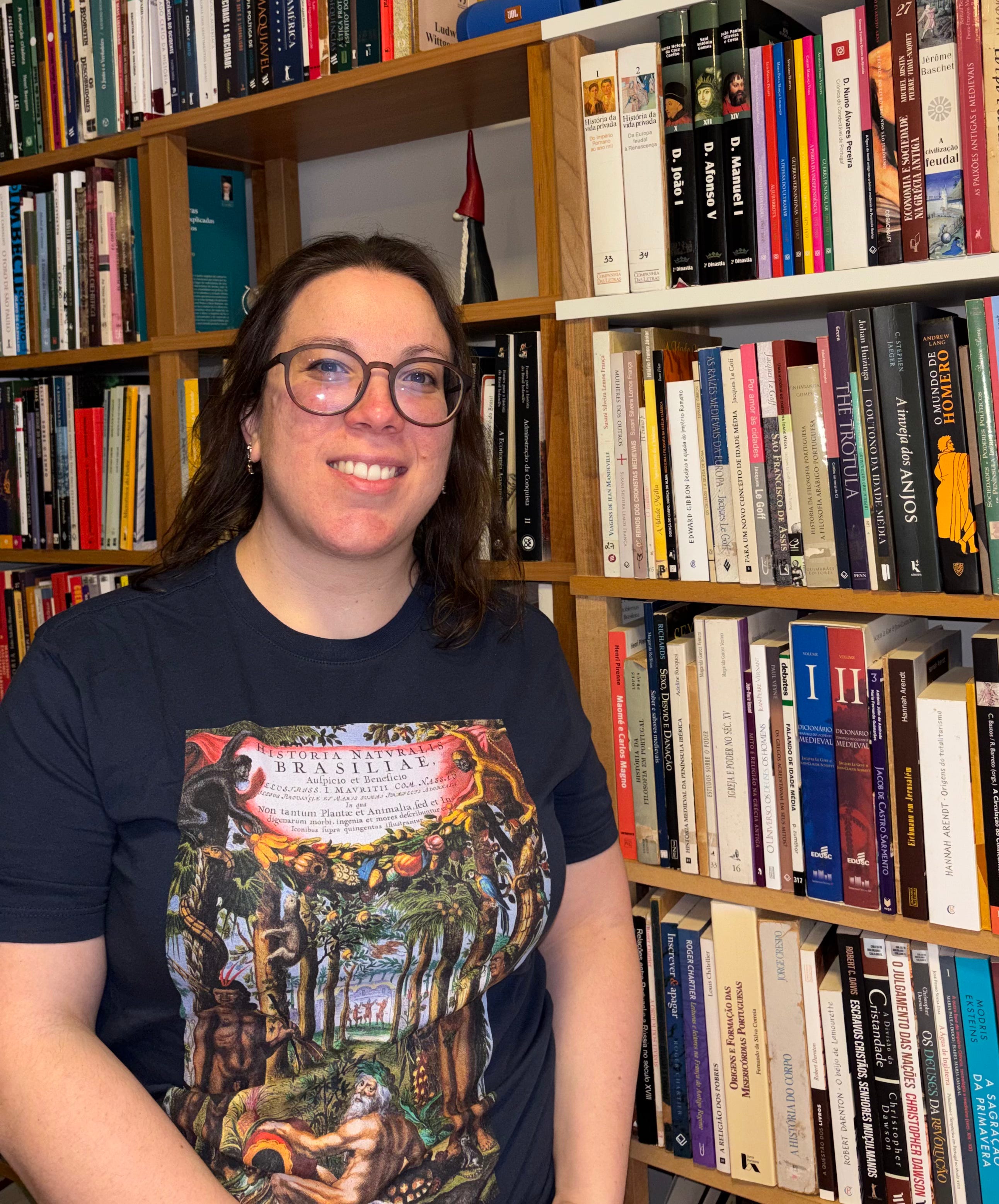
We are excited to return with our Beyond the Archives Series and feature Amanda Peruchi, a wonderful historian. Her work focuses on the history of pharmaceutical practices and knowledge and reveals how pharmacies played an important role in shaping and producing scientific knowledge.
Peruchi’s Substack features articles in English and in Portuguese. Fret not. Substack now includes a translation option for articles. Peruchi’s posts are cogent, accessible, and use evidence to substantiate claims.
Here at Curing Crime, we are also excited to feature writers and content that pushes learning beyond Europe and the United States. Peruchi is an expert in Brazilian history, which allows her to explore how scientific and medical knowledge manifest in a different context.
What sparked your interest in your field of study? Was there anything specific?
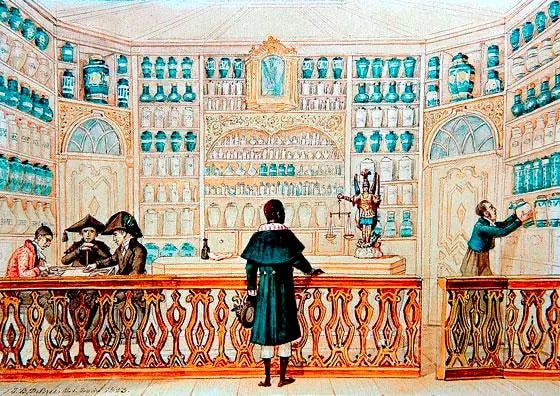
Since my PhD, my research has focused on the history of pharmacy in nineteenth-century Brazil. My interest in this subject began when I came across advertisements for medicines in Brazilian newspapers. Many of these advertisements used persuasive language or striking images to make the medicines more appealing to people suffering from illnesses. This sparked my curiosity about how these medicines were produced, by whom, and under what conditions, leading to my doctoral thesis on the institutionalisation of pharmacy in Brazil and, subsequently, to my recently completed postdoctoral research on pharmaceutical education in nineteenth-century Brazil.
Why Substack? What do you hope to achieve here? How do you balance storytelling with academic rigour when publishing?
In 2022, I wrote several articles for Brazilian newspapers to mark the bicentenary of Brazil’s independence, and I really enjoyed the experience of writing about history for a non-academic audience. Last year, I began contributing to an online publication again, but I started to think it would be interesting to have a space of my own to share my research and write about other historical topics. That is how I came to Substack.
My aim is to reach a non-academic audience, but also to use this space to experiment with new ideas and different approaches to writing, exploring questions that might eventually be developed into academic articles. In this sense, I see Substack both as a way of sharing my research and as a space for experimentation and reflection on my own work as a historian.
As for balancing engaging storytelling with academic rigour, I always try to base my writing on historical documents and scholarly literature, presenting events in an accessible way without losing sight of their historical context. I often begin with a particular episode, a newspaper advertisement, or a lesser-known historical figure to explore broader questions about Brazilian history. The challenge is to find a way of telling these stories that sparks readers’ curiosity without compromising historical accuracy or oversimplifying historical interpretations.
Briefly, tell us what you study and, in your opinion, what is the most pressing issue or the most intriguing unanswered question in your field. Why does it matter today?
My research focuses on the history of pharmacy in nineteenth-century Brazil. During my PhD, I studied how pharmacy became institutionalised in the country, particularly with regard to the regulation of the pharmaceutical profession and the production and trade of medicines. More recently, during my postdoctoral research, I investigated the scientific literature used in the education of Brazilian pharmacists. Building on these studies, my interest has now turned to medicines themselves or, more specifically, to the medicinal substances used as raw materials in their preparation.
I believe that one of the most interesting questions in this field is how we can understand the history of pharmacy as part of the history of science. Pharmacy should not be studied in isolation, as its development was closely connected to transformations in other fields of knowledge, such as chemistry, physics, and medicine. Examining these connections allows us to understand not only the history of medicines, but also how different forms of knowledge and scientific practices contributed to their production and use.
One question that still requires further investigation is how pharmacists actually participated in the production and circulation of this knowledge, particularly in countries such as Brazil, whose scientific history does not always receive the same attention as that of major European centres. Understanding this history also helps us recognise that the medicines and pharmaceutical knowledge we use today are the result of complex historical processes involving different professionals, institutions, and scientific traditions.
What’s the most surprising or counterintuitive thing you’ve learned in your research?
One of the things that struck me most during my research was the number of reports of improperly prepared medicines being sold, whether due to errors in their formulations or the use of inappropriate ingredients. On the other hand, I was also surprised by how much effort Brazilian pharmacists made to keep up with scientific and pharmaceutical developments in other countries, seeking to incorporate new knowledge, techniques, and procedures into their work. What I find particularly interesting is how these two realities coexisted: while there were problems concerning the quality of medicines being sold, there were also efforts to improve pharmaceutical practices and keep pace with the scientific developments of the time.
What books, films, or documentaries would you recommend for someone looking to understand your field better?
I would recommend three books that I think are particularly interesting for readers who are new to the history of pharmacy: Making Medicines: A Brief History of Pharmacy and Pharmaceuticals, The Drug Book: From Arsenic to Xanax, and The Fever Trail: In Search of the Cure for Malaria.
The first, edited by Stuart Anderson, a researcher specialising in the history of British pharmacy, provides an overview of the history of pharmacy and medicines, exploring scientific, social, and professional developments. The book is particularly interesting because it connects the development of pharmacy with changes in other fields of knowledge and in society more broadly.
The second book, by Michael C. Gerald, presents 250 milestones in the history of medicines through short texts and illustrations. It is a very accessible read for those without an academic background in the field who would like to learn about some of the events, figures, and discoveries that have shaped the history of medicines.
Finally, The Fever Trail, by Mark Honigsbaum, is a book I would especially recommend to anyone interested in the history of medicinal substances. It follows the search for cinchona trees in South America and the efforts to establish their cultivation in other parts of the world, particularly in the context of nineteenth-century European colonial expansion. The narrative shows how the history of a medicine, in this case quinine, was connected not only to science and medicine, but also to the exploitation of natural resources, scientific expeditions, and economic and political interests.
If the public could grasp just one key idea about your field, what would it be and why?
If I could highlight just one idea, it would be that the history of pharmacy is also a history of the production of scientific knowledge. For a long time, pharmacists were primarily associated with the preparation and sale of medicines. However, these professionals also took part in scientific investigations, conducted experiments, studied medicinal substances, and contributed to the development of fields such as chemistry and medicine.
Understanding this aspect of the history of pharmacy is important because it allows us to recognise the role of pharmacists in the production of scientific knowledge and to appreciate that science did not develop in isolation, but through interactions between different professionals, forms of knowledge, and practices.
You must encounter many dark and challenging materials during your research. How do you deal with this work?
Thinking about the historical sources I work with, one of the things that strikes me most is how medicines were advertised with promises of cures and how these advertisements sought to raise patients’ expectations. Many advertisements published in nineteenth-century newspapers presented these medicines as almost miraculous cures for various illnesses, using highly persuasive language to convince readers of their effectiveness. Sometimes, I come across accounts of treatments, pharmaceutical preparations, and promises of cures that, from the perspective of what we know today, can seem rather alarming. However, we need to take into account the scientific knowledge available at the time and the ways in which people sought treatment for their illnesses.
Is there a danger that others may misconstrue the desire to explain why people commit such crimes as justifying them?
I believe that this risk exists, but explaining why people acted in a certain way does not mean justifying their actions. The historian’s task is to understand the circumstances, knowledge, and interests that shaped certain practices, taking into account the context in which they occurred. In the history of pharmacy, for example, it is important to distinguish between practices that were considered legitimate at the time and those that were already condemned by contemporaries, such as the adulteration of medicines. I think that understanding the past requires precisely this kind of care: avoiding judgements based solely on present-day knowledge and values, while still recognising the consequences that certain practices had for people’s lives.
You publish in multiple languages on the same account, can you tell us more about your thinking behind this decision? (Note Substack now has a translate feature)
Well, my intention in publishing in both Portuguese and English is to reach different audiences who share an interest in history. Portuguese is the main language of my posts because I want to share my research with Brazilian readers. However, I am increasingly considering the possibility of publishing exclusively in English, as I believe that international audiences still know relatively little about Brazilian history, particularly the history of science in Brazil. For now, I will continue to publish in both languages on the same Substack, as I see them as part of a single project aimed at making history accessible to a wider audience. Moreover, although the platform now offers a translation feature, I believe that writing directly in each language also allows me to adapt my language and the way I present historical topics to different audiences.
What advantages do you see in engaging with literatures and audiences in different languages?
I believe that one of the main advantages is the opportunity to explore different historiographical perspectives and engage in dialogue with researchers and readers from other countries. Studies on certain subjects often remain confined to the languages in which they were published, making their international circulation more difficult. In the case of Brazilian history, for example, there is a rich body of historical scholarship in Portuguese that does not always reach international audiences. At the same time, engaging with literature published in other languages allows us to explore different approaches and research questions, broadening our own interpretations. I think this exchange is essential for the production and dissemination of historical knowledge.
Our readers would find your work valuable. Could you recommend 2-3 of your posts?
I would recommend three posts that reflect different aspects of my research interests. The first, Bernardino António Gomes, Brazilian Medicinal Plants, and the History of Pharmacy, explores the investigations carried out by a Portuguese physician into Brazilian medicinal plants and their connections to the history of pharmacy.

The second, A Brief Note on Pharmacy Education in Nineteenth-Century Brazil. examines the education of Brazilian pharmacists during the nineteenth century, from apprenticeships in apothecaries’ shops to the establishment of the first official courses.
Finally, Exploring Brazil’s Medical Past: The Collections of the National Academy of Medicine introduces an important collection of historical sources for studying the history of medicine in Brazil, highlighting some of the materials we use in our research.